All planning applications in the country will have to be submitted in 3D format from 2030
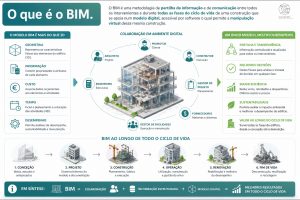
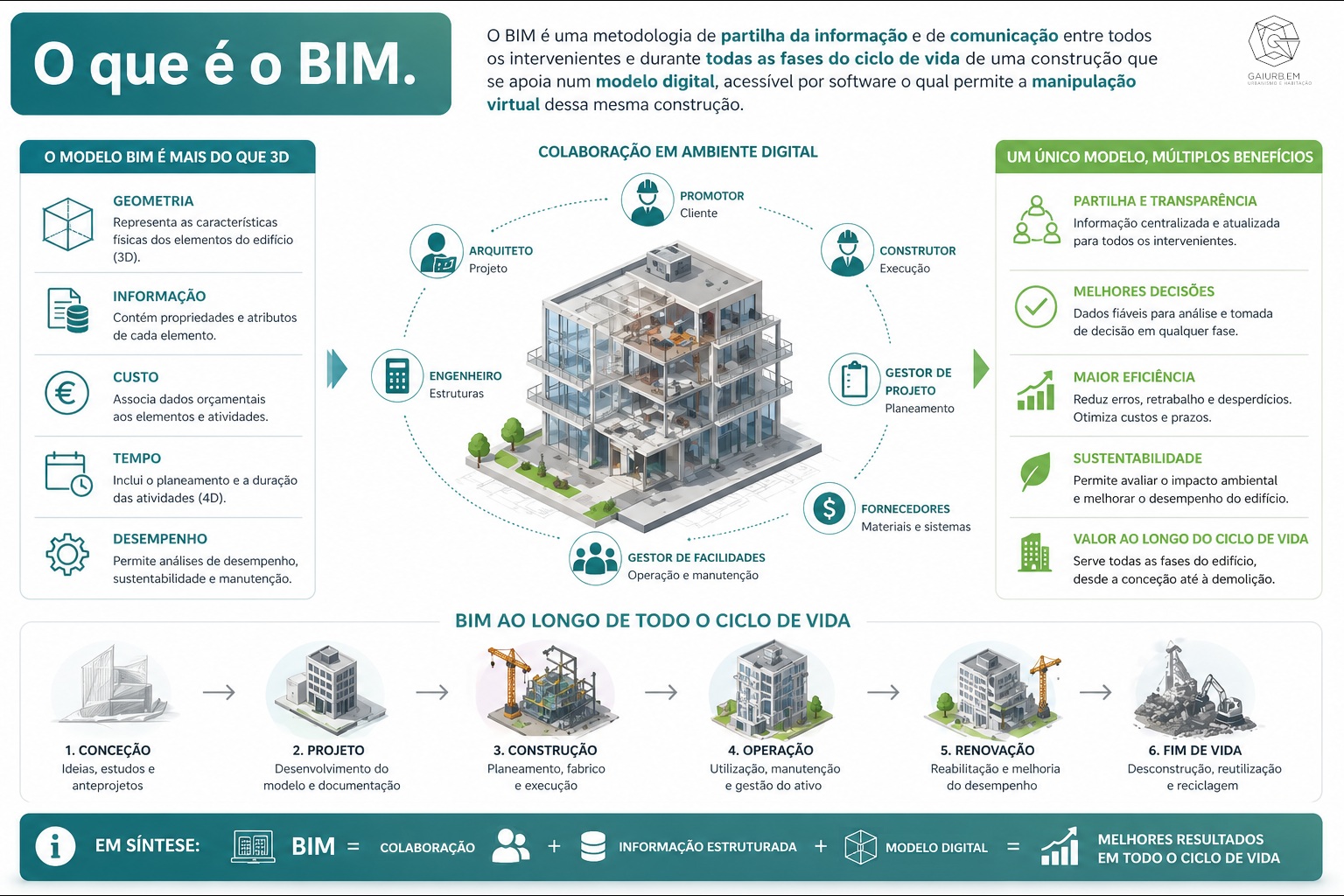
The Municipality of Gaia, with the support of the UMinho School of Engineering, has launched a groundbreaking guide to digital building planning, aimed at making the analysis and approval of building projects more transparent and efficient. The initiative anticipates the legal requirement that, by 2030, all urban planning applications in the country must submit architectural designs in accordance with the BIM (Building Information Modelling) methodology.
The “Manual of Good Practice for Construction Licensing with BIM” is publicly available at gaiurb.pt/p/bimv. The initiative is the result of an R&D collaboration between the municipal company Gaiurb – Urban Planning and Housing (a team led by engineer Marco Lima Carvalho and architect Patrícia Baptista), the Department of Civil Engineering at the UMinho School of Engineering (a team of researchers comprising Miguel Azenha, José Granja and Bruno Muniz) and the technology firm ESRI Portugal.
The use of BIM methodology, which is currently optional, allows for the preliminary assessment and validation of projects in a more streamlined and transparent manner for all stakeholders, and can also enhance the ability to respond to the challenges posed by artificial intelligence in the construction industry, says Professor Miguel Azenha.
The new manual is evolving and open to contributions or clarifications via email at sig@gaiurb.pt. By pioneering this transition, the Municipality of Gaia is complying with Decree-Law 10/2024, promoting innovation, investing in a smarter city and also paving the way for many other local authorities.
“The BIM methodology is collaborative, based on a digital model that integrates information in ways that were unthinkable just a few years ago, and its usefulness in architecture and construction is expressed in many ways,” stresses Miguel Azenha. However, adds the researcher at the Institute for Sustainability and Innovation in Structural Engineering (ISISE), “there are significant challenges for professionals, as it demands new ways of working and collaborating, necessitating a learning process; and there is also a set of new standards, such as ISO 19650, to which the sector’s business community is adapting”.