The 18th edition of RoboParty, which took place between 25 and 27 March 2026 at the University of Minho in Guimarães, once again proved to be a hugely successful event. RoboParty is organised by the University of Minho’s Automation and Robotics Laboratory, in partnership with botnroll.com, a spin-off from the University of Minho.
This edition saw the participation of around 420 young people, spread across 105 teams, from all over the country, including the islands, as well as international teams from Spain and the Netherlands.
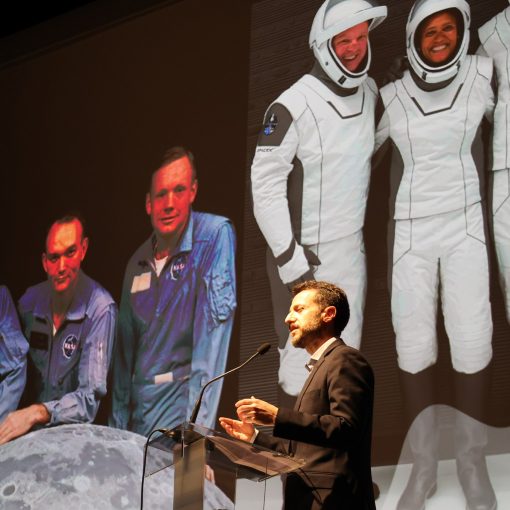
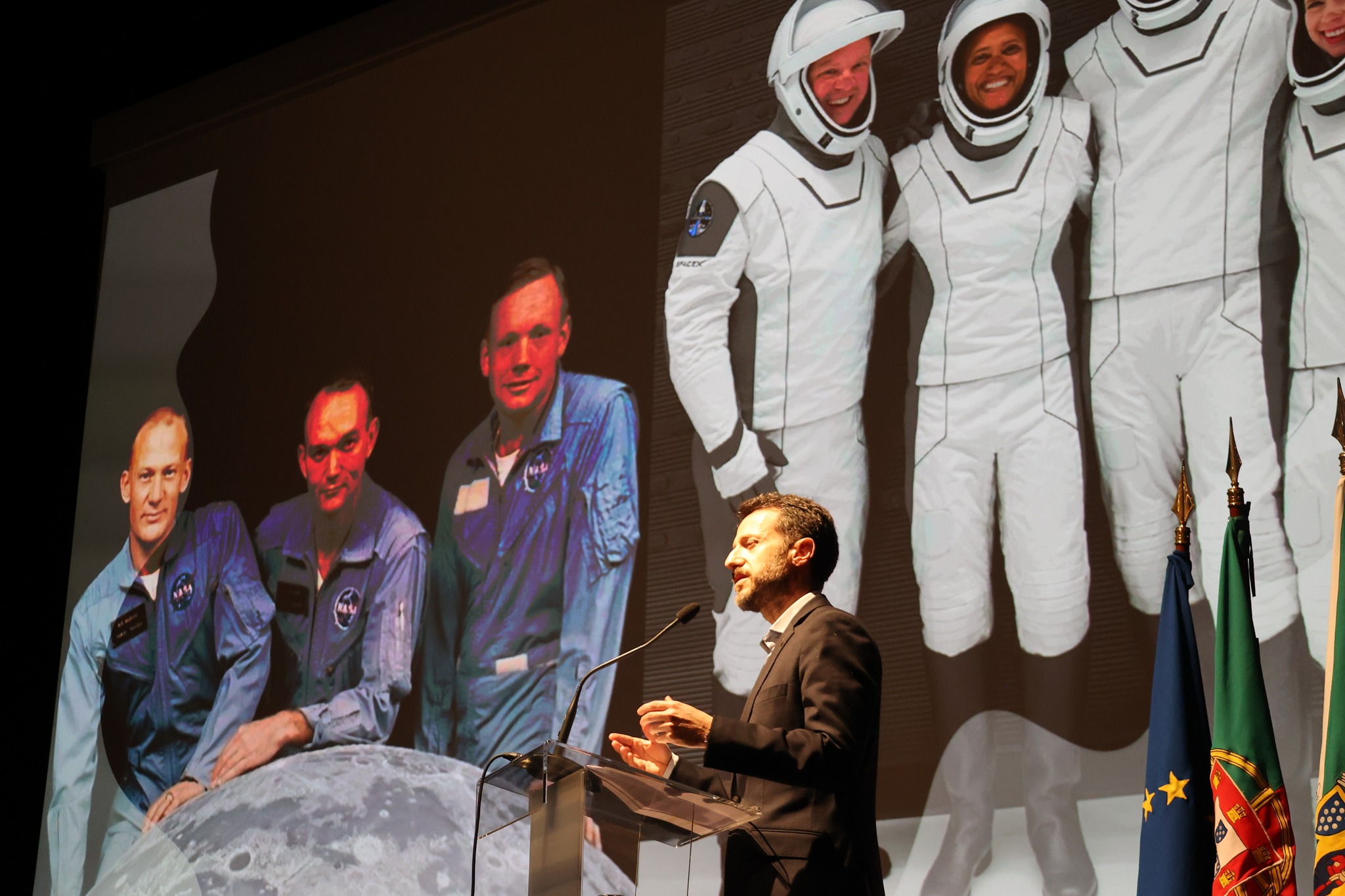
The programme began with a formal opening ceremony attended by various dignitaries, including the Vice-Rector of the University of Minho, Professor Nuno Castro, the representative of the Municipality of Guimarães, Dr Isabel Sousa, the Vice-President of the School of Engineering, Professor Daniel Oliveira, and the Director of the ALGORITMI Centre, Professor Paula Varandas Ferreira. In their speeches, they highlighted the importance of RoboParty as an initiative to promote technology, education and the development of skills among young people.
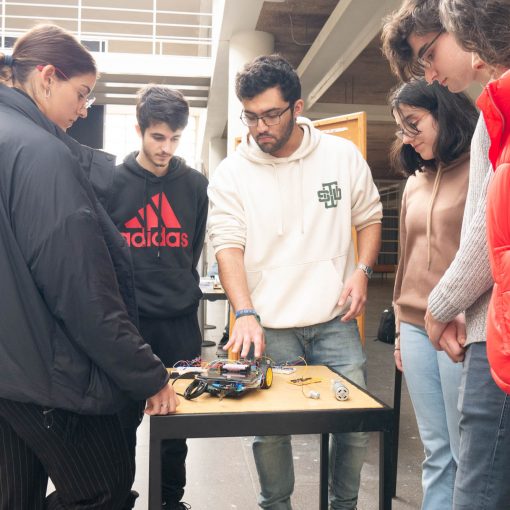
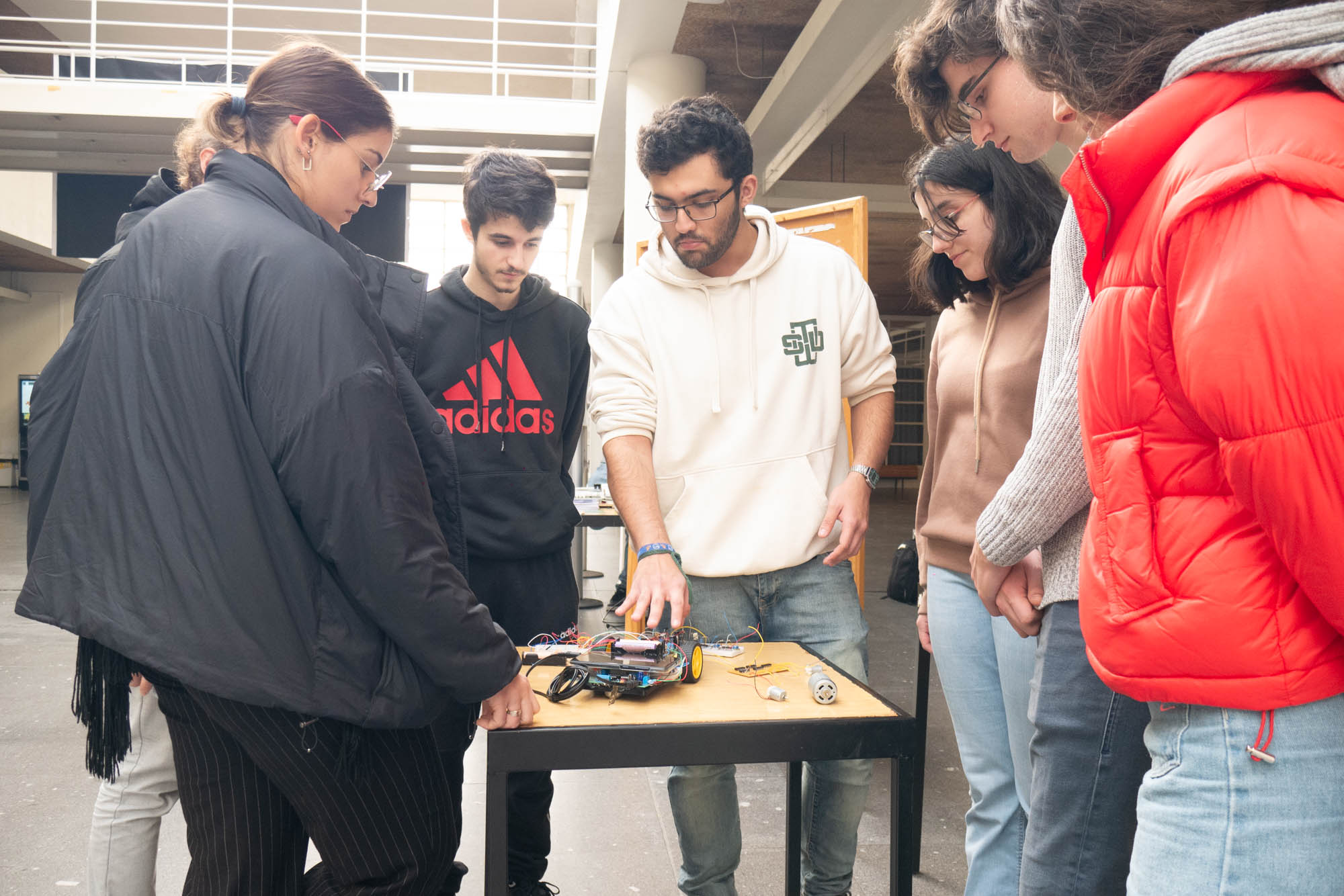
The event began with a training session on building the control board and soldering electronic components, followed by the distribution of the electronic and mechanical kits needed to build a 100% Portuguese robot, compatible with Arduino. The robot developed, the Bot’n Roll ONE A+, features wheel encoders, a line sensor and the option to connect to a Raspberry Pi. Within a few hours, most teams had successfully assembled their robot. At the same time, participants had access to various recreational and sporting activities, such as table tennis tournaments, a treasure hunt, volleyball, shooting practice, 21-a-side basketball and chess. The teachers enrolled in accredited training also took part in specialised sessions, namely on MATLAB and Simulink, led by Dr Ascension Vizinho-Coutry (MathWorks), a session on humanoid robotics led by Chaoyi Li (Booster Robotics, China), and a presentation by Dr Rui Baptista on participation in national and international robotics competitions.
After dinner, the atmosphere was enlivened by performances from the student music groups Tun’Obebes – the University of Minho’s Women’s Engineering Tuna – and Afonsina – the University of Minho’s Engineering Tuna. Throughout the evening, many participants continued to work intensively on building and programming their robots, showing great enthusiasm and dedication. A specific area in the pavilion, known as RoboHotel, was provided for rest.
On the second day, training in programming with Arduino IDE took place, after which the teams began developing their programmes. During the afternoon, the Fun Challenge robotics competition was held, a dynamic contest in which the robots had to push table tennis balls into the opponents’ court, combining technical performance with the participants’ strategy and dexterity.
On the third day, the Crazy Race challenge took place, in which the robots navigated a course featuring a maze and line-following tasks. After lunch, the Robot Show was held, open to the public, where virtually all the teams presented their robots, showcasing creativity and originality through various choreographed demonstrations set to music. Judging was carried out by a panel of eight judges.
The event culminated in the awards ceremony for the winning teams of the various robotics challenges, bringing to a close yet another edition marked by enthusiasm, team spirit and a strong educational component. The prizes for the top three finishers in all the robotics challenges were awarded as follows:
FUN CHALLENGE
1st – CENFIM_M_Grande CENFIM – Marinha Grande
2nd – Robozelenses Caldas de Vizela School Group
3rd – Beirões Ribeirão School Group
Crazy Race
1st – Pinky Rats Águeda Sul School Group
2nd – RobotMarco Marco de Canaveses School Group No. 1
3rd – Desprogramados FORAVE Vocational School – Guimarães
Dance
1st – Epra-Team
– Epralima – Alto Lima Vocational School – Ponta de Barca
– Epralima – Alto Lima Vocational School – Arcos de Valdevez
2nd – No Rumo Certo
– Ílhavo School Group
– Felgueiras Vocational School
– Colégio Novo da Maia
3rd – LusoBot
– Fajões School Group
– Diogo de Macedo School Group
It is worth noting that RoboParty provided certified training to 56 teachers, comprising 30 hours of training and 1.2 credit units, through the Francisco de Holanda Training Centre.
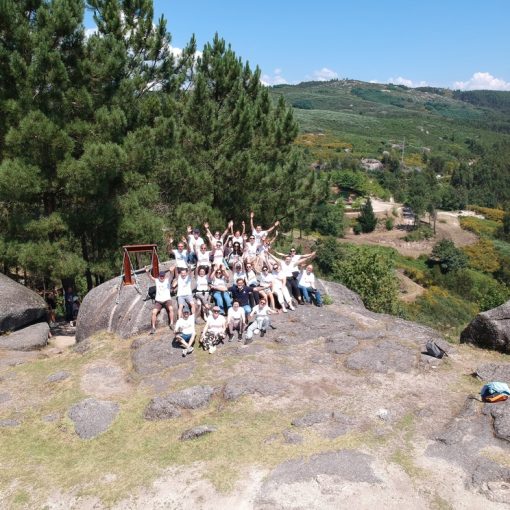
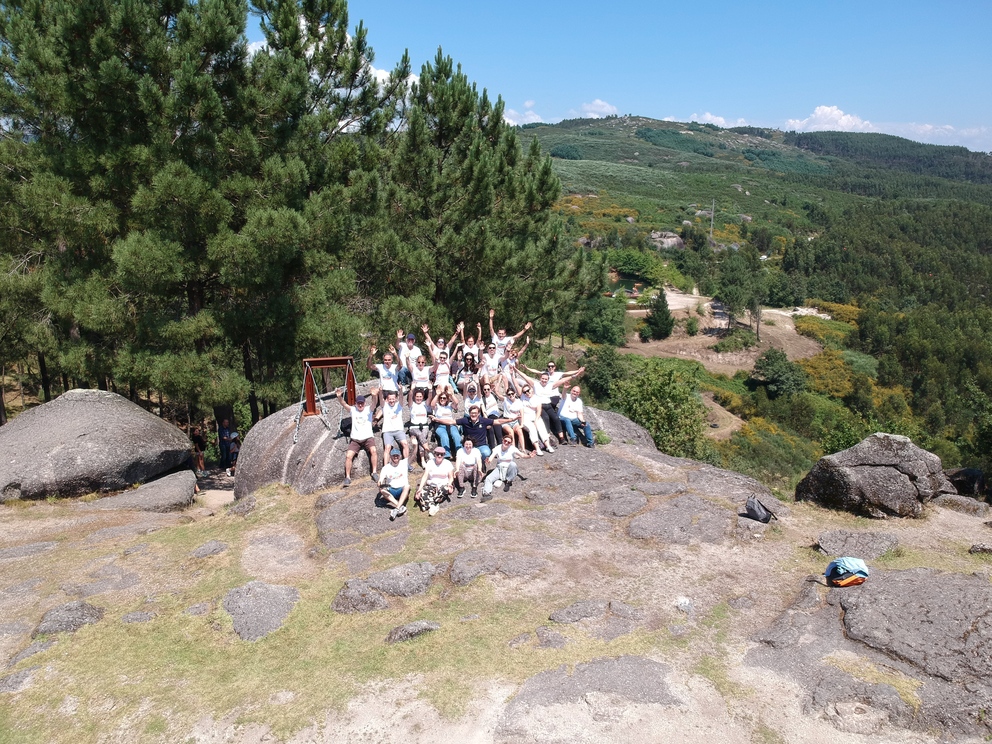
In addition to the various sponsors, the commitment of around 80 student volunteers studying Industrial Electronics at the UMinho School of Engineering stands out, alongside around 30 other members of the organising team.
More info: http://www.roboparty.org
SOURCE: LAR UMinho