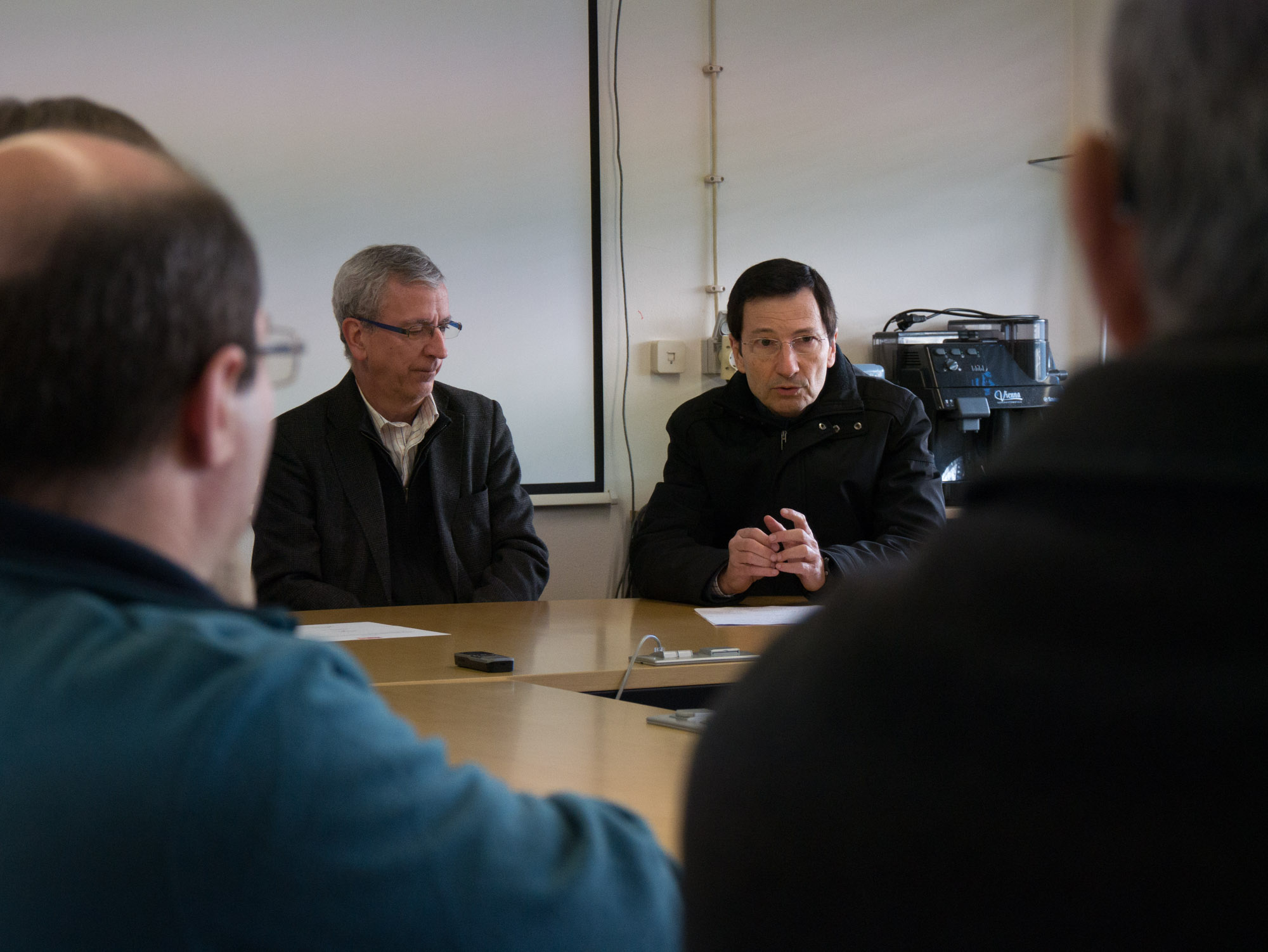
 Cycle of interviews with the members of the new Advisory Board of the School of Engineering. In this edition we interviewed Eng. Teresa Martins, General Manager of NEADVANCE.
The Advisory Board of the School of Engineering of the University of Minho (EEUM) is the advisory body of the School’s governing bodies for matters of strategic definition. Composed of nine personalities external to the institution, of recognized merit in the areas of their activity, their mission is to pronounce on matters of a pedagogical, scientific nature and interaction with society.
How did you receive the invitation to join the Advisory Board of the School of Engineering of the University of Minho and what meaning do you attribute to this connection, as the leader of a company highly specialized in computer vision and artificial intelligence applied to industry?
The invitation to join the Advisory Board of the School of Engineering of the University of Minho was a source of great pride, satisfaction and a feeling of reciprocity.
The mission of the Advisory Board is to bring the School closer to society and companies, contributing to the definition of the vision and its development. My connection to this Council means the strengthening of the University’s connection to companies, through strategic advice and the identification of scientific and technological trends in NEADVANCE’s areas of knowledge and activity.
Having also had an academic career linked to the University of Minho, how do you see this participation in the Advisory Board: as an institutional responsibility, an opportunity for retribution or also as a way to bring the School even closer to the technological challenges facing the industry today?
The University of Minho was my university, both in my undergraduate and master’s degrees, where I acquired the fundamental knowledge for the development of my professional career. Therefore, I see this participation as an opportunity to give back to the institution part of the contribution it had in my training and in my career.
However, and far beyond this feeling, this connection is an excellent opportunity to work and develop the connection between the School and companies.
As industrial automation, based on Computer Vision and Artificial Intelligence, is an area of excellence for the industrial development of smart factories and NEADVANCE is a company specialized in the development of this type of products for the global market, my participation, as leader of NEADVANCE, may contribute to bring the School even closer to the industrial reality, sharing a vision on technological evolution and the needs of highly demanding sectors, such as the automotive and aerospace industry.
In your perspective, what distinctive value can the presence, in this body, of a company like NEADVANCE, which operates in areas of high technological intensity such as artificial vision, automation and intelligent systems, bring to the EEUM’s strategic reflection?
NEADVANCE may bring a distinctive contribution to the strategic reflection of the School of Engineering of the University of Minho for its experience in the development of innovative technological solutions for industry.
His activity in areas such as artificial vision, artificial intelligence, automation and intelligent systems provides an insider’s view of the technological trends and skills that will shape the engineering of the future. This perspective may contribute to the evolution of the training offer, to the identification of new areas of research and to the strengthening of the connection between the School and the business community.
In addition, NEADVANCE’s experience in collaborative R&D projects and in international markets can support the development of strategic partnerships, promote knowledge transfer and bring students closer to the real challenges of the industry.
I believe that NEADVANCE’s main distinctive value lies in its ability to provide a strategic vision of technological evolution and the needs of industry, contributing to the EEUM continuing to train engineers prepared to respond to the challenges of innovation and global competitiveness.
As an external member of this body, what kind of contribution would you like to make to the School of Engineering at a time when engineering training is called upon to respond to increasingly digitized, automated and data-driven productive contexts?
The School of Engineering must reflect in order to anticipate the skills that will be increasingly needed and valued in the industry. Factories are evolving towards highly digitized, automated, and data-driven environments, where intelligent systems, artificial vision, artificial intelligence, and collaborative robotics play a central role in the automation and optimization of production processes.
This transformation results from the integration of multiple areas and technologies, requiring professionals with a solid scientific background, but also with the ability to integrate knowledge from different areas, innovate and adapt to constant technological evolution.
In this context, the School of Engineering should continue to strengthen multidisciplinary training, complemented by the development of skills such as critical thinking, creativity, curiosity, entrepreneurial spirit and the ability to work in multidisciplinary teams. Proximity to industry and contact with real challenges will also be fundamental to prepare engineers capable of leading the digital and technological transformation of companies.
In the next three years, in which areas do you think NEADVANCE’s expertise can be most useful to support the School of Engineering, namely in areas such as computer vision, artificial intelligence, automatic inspection, robotics, quality control and industrial digitalization?
NEADVANCE’s expertise may be particularly relevant in the areas of computer vision, artificial intelligence, automatic quality inspection, robotics, automation and industrial digitalization.
This knowledge can support the School of Engineering in the identification of technological trends, in bringing research closer to the needs of industry and in the development of collaborative R&D projects. It can also contribute to the updating of the training offer, to the creation of internship opportunities and dissertations in a business context.
What opportunities do you identify for a closer collaboration between EEUM and NEADVANCE at the level of joint projects, technological experimentation, internships, dissertations and development of solutions with direct application in real industrial environments?
I believe that there are several opportunities to strengthen the collaboration between the EEUM and NEADVANCE. In addition to curricular and professional internships, master’s dissertations and doctoral theses on topics of common interest, collaborative R&D projects may be developed oriented to concrete industrial challenges, involving teachers, researchers and students.
The promotion of thematic workshops, technical seminars, technological demonstrations and other initiatives that bring students closer to the industrial reality and emerging technologies are also very valuable for NEADVANCE.
At a time when technologies such as artificial vision and artificial intelligence are profoundly transforming production systems, what skills do you consider most important to strengthen in the training of future engineers?
Skills in programming, data science, computer vision, artificial intelligence, cybersecurity and communications should be strengthened. At the same time, it is important to understand concepts of automation, robotics, interoperability, and production processes.
The development of these technical skills needs to be complemented with the development of skills such as critical thinking, complex problem-solving, creativity and adaptability, as technologies evolve rapidly and require continuous learning.
The development of multidisciplinary teamwork and project management skills is fundamental, as the challenges involve professionals from different areas and require a strong ability to collaborate.
Finally, I believe it is essential to include in training a reflection on the ethics and responsible use of artificial intelligence, preparing future engineers to develop technologically advanced solutions, but also safe, sustainable and people-centred.
If you had to point out two or three priority initiatives to be developed between EEUM and NEADVANCE in the next three years, what bets would you consider most relevant to generate impact in terms of applied innovation, talent qualification and the connection between the School and industry?
The most interesting and priority initiatives to be developed between the EEUM and NEADVANCE are the following:
Dissemination to students of undergraduate degrees of the R&D activity, type of projects and challenges of NEADVANCE, to arouse or increase interest in areas related to industry and automation.
To extend the collaboration with PhD students of the School of Engineering.